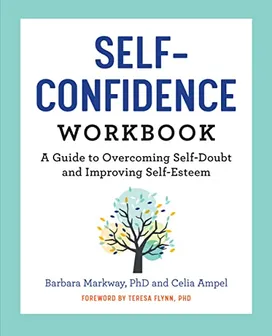
The Self Confidence Workbook
by Barbara Markway and Celia Ampel
Started 12 September 2021 · 178 pages
A workbook of exercises, drawn from cognitive behavioural and acceptance-based therapies, for overcoming self-doubt and building self-esteem.
About the book, from Open Library. Get the book.
60 highlights · Kindle location in the margin
- 76
RESEARCH HAS SHOWN that self-confidence is linked to almost everything we want in life: success at work, secure relationships, a positive sense of self, and happiness.
- 108
self-confidence has more to do with inner resolve than with outward bravado.
- 109
I grew up a shy, anxious kid who rarely spoke to people other than my close friends and family. Although bright, I never raised my hand in class to answer a question. I was too afraid even to ask to go to the bathroom.
- 113
I went on to college and continued to do well in school, but never dated or enjoyed much of a social life.
- 115
I went through a lot of psychotherapy that proved very helpful. I learned to speak up. I learned my opinion mattered. I also learned it was okay to be wrong. I even mustered up the courage to ask my now-husband of nearly 30 years out on a date. Somewhere along the way, I became self-confident—I just didn’t label it as such.
- 148
you’ll set goals, envisioning a life where self-doubt doesn’t hold you back from advancing in your career, setting a good example for your kids, facing conflict, building strong relationships, or making a difference in your community.
- 177
The problem with defining confidence as a feeling is that in practice it becomes a catch-22: If you don’t feel confident, you’re not likely to try.
- 180
it’s what we do that matters, not so much how we feel when we’re doing it.
- 186
definition of self-confidence: the willingness to take steps toward valued goals, even if you’re anxious and the outcome is unknown. True self-confidence is part courage, part competence, with a healthy dose of self-compassion mixed in.
- 189
Actions come before feelings. Actions are guided by values—the things you care about. Process is more important than outcome.
- 194
Confidence comes from being grounded in your sense of self: remembering who you are, what you value, and the hard work you’ve put in.
- 195
Studies show that a simple thought exercise can help people decrease their anxiety ahead of having to perform a task in a high-stakes situation. In research led by psychologists David Creswell and David Sherman, participants were asked to take a moment to reflect on a core value—say, being a good friend or respecting the environment. Then, each person wrote about a memory of a time they embodied that value. Those who did the exercise had far lower adrenaline levels heading into stressful situations, such as exams or public speeches, than those who didn’t—even if the core values weren’t at all relevant to the task at hand. What mattered was that the participants were contemplating a deep truth about themselves, rather than a hollow slogan, such as “I’m the best.”
- 213
“There’s zero correlation between being the best talker and having the best ideas.” —SUSAN CAIN
- 225
Confidence isn’t something you have to possess every moment of every day. Nor should you expect to jump instantly into perfect self-assurance tomorrow. Instead, confidence is a choice to take steps to act in line with your values.
- 228
it’s important to practice self-compassion: speaking to yourself with the kindness and patience you would show a loved one or a child.
- 251
Confidence is not about being the one who speaks the loudest or who dominates every moment. It’s also not about having a fancy car or other symbols of wealth or status.
- 252
It’s about being rooted in who you really are, freeing up your mind from obsessive worry and self-doubt.
- 270
Too little confidence and you avoid trying new things, pass on taking even small risks, and miss out on engaging in activities that would make life more meaningful and enjoyable. Too much confidence—confidence not grounded in reality—can get you into trouble.
- 282
First, confidence involves preparation. You have to put in the needed work ahead of time. Second, confidence doesn’t mean you won’t make mistakes; you will, but the mistakes won’t crush you. You’ll take the feedback and learn from it. And finally, confidence involves listening.
- 294
Studies have shown that our genetic makeup affects the amount of certain confidence-boosting chemicals our brain can access. Serotonin, a neurotransmitter associated with happiness, and oxytocin, the “cuddle hormone,” can both be inhibited by certain genetic variations. Somewhere between 25 and 50 percent of the personality traits linked to confidence may be inherited.
- 296
Some aspects of our behavior also stem from our temperament. If you’re naturally more hesitant and watchful, especially in unfamiliar circumstances, you may have a tendency called behavioral inhibition. When you’re confronted with a situation, you stop and check to see if everything seems the way you expected it to be. If something appears awry, you’re likely to move away from the situation.
- 305
Trauma. Physical, sexual, and emotional abuse can all significantly affect our feelings of self-worth. If you find yourself replaying memories of abuse or otherwise feeling tormented by or ashamed of your experiences, please consider seeking treatment from a licensed clinician.
- 307
Parenting style. The way we were treated in our family of origin can affect us long after childhood. For instance, if you had a parent who constantly belittled you, compared you to others, or told you that you would never amount to anything, you likely carry those messages with you today.
- 311
Bullying, harassment, and humiliation. Childhood bullying can leave a mark on your confidence when it comes to looks, intellectual and athletic abilities, and other areas of your life. Humiliating experiences in adulthood, including workplace harassment or a peer group that disrespects or demeans you, can also make you less willing to speak up for yourself or pursue ambitious goals.
- 314
Gender, race, and sexual orientation. Scores of studies show women are socialized to worry more about how they’re perceived and, therefore, to take fewer risks. Racial and cultural background and sexual orientation can make a difference, too.
- 319
Lack of self-confidence can come from not knowing the “rules” of the confidence game. For example, if we think we have to feel confident in order to act confidently, we set ourselves up for failure.
- 322
Perfectionism is another form of faulty thinking that contributes to low self-confidence. If we believe we have to have something all figured out before we take action, those thoughts can keep us from doing the things we value. Even learning and understanding what confidence is and isn’t, as you’re doing in this chapter, is a big step toward boosting it.
- 333
“ONE REASON WE STRUGGLE WITH INSECURITY: WE’RE COMPARING OUR BEHIN D-T HE-SCENES TO EVERYONE ELSE’S HIGHLIGHT REEL.” —STEVEN FURTICK
- 336
It’s common for anxiety and depression to go hand in hand with self-confidence issues.
- 350
The Benefits of Improving Confidence
- less fear and anxiety
- 353
The more confident you become, the more you’ll be able to calm the voice inside you that says, “I can’t do it.” You’ll be able to unhook from your thoughts and take action in line with your values.
- greater motivation
- 359
Building confidence means taking small steps that leave a lasting sense of accomplishment. If you’ve ever learned a language, mastered a skill, reached a fitness goal, or otherwise overcome setbacks to get to where you wanted to be, you’re well on your way already.
- 363
If you think back to a key accomplishment in your life, you’ll likely find it took a lot of perseverance. If you could triumph through adversity then, you can do it in other areas of your life where you feel self-doubt.
- more resilience
- 368
Confidence gives you the skills and coping methods to handle setbacks and failure. Remember, self-confidence doesn’t mean you won’t sometimes fail. But you’ll know you can handle challenges and not be crippled by them. Even when things don’t turn out anywhere close to what you planned, you’ll be able to avoid beating yourself up.
- 371
As you keep pushing yourself to try new things, you’ll start to truly understand how failure and mistakes lead to growth. An acceptance that failure is part of life will start to take root. Paradoxically, by being more willing to fail, you’ll actually succeed more—because you’re not waiting for everything to be 100 percent perfect before you act. Taking more shots will mean making more of them.
- improved relationships
- 376
We’ve all been guilty of walking into a room and thinking, “They’re all looking at me and judging me. They don’t like me; they think I’m ignorant!” The truth is, people are wrapped up in their own thoughts and worries. When you get out of your own head, you’ll be able to genuinely engage with others.
- 381
Self-confidence can also breed deeper empathy. When you’re fully present in the moment, you’re more likely to notice that your date seems to be a little down, or that a friend in the corner of the party looks like she needs a shoulder to cry on. When you’re not preoccupied with your own self-doubt, you can be the person who reaches out to help others with their problems.
- 385
confidence roots you in who you really are. You’ll be able to accept your weaknesses, knowing they don’t change your self-worth. You’ll also be able to celebrate your strengths and use them more fully.
- 386
Your actions will be in line with your principles, giving you a greater sense of purpose. You’ll know who you are and what you stand for. You’ll have the skills to show up, stand up, and speak up. In other words, you’ll be able to let your best self shine through.
- b
- c
- c
- c
- c
- c
- c
- c
- b
- b
- b
- c
- c
- c
- c
- a
- 475
confidence is all about action.